GET IN TOUCH


Most Control Panels do Their Job Quietly in the Background
On most industrial sites, control panels are not something people think about day to day.
If machines are running and production is moving, the assumption is usually that everything behind the scenes is working as it should. And most of the time, that is true.
But control panels are often at the centre of industrial operations. They manage machinery, distribute power, control automation systems, and help keep processes running safely and reliably.
The issue is that problems within a control panel do not always appear suddenly. In many cases, the warning signs build gradually over time. And because the system is still technically working, those signs can be easy to ignore.
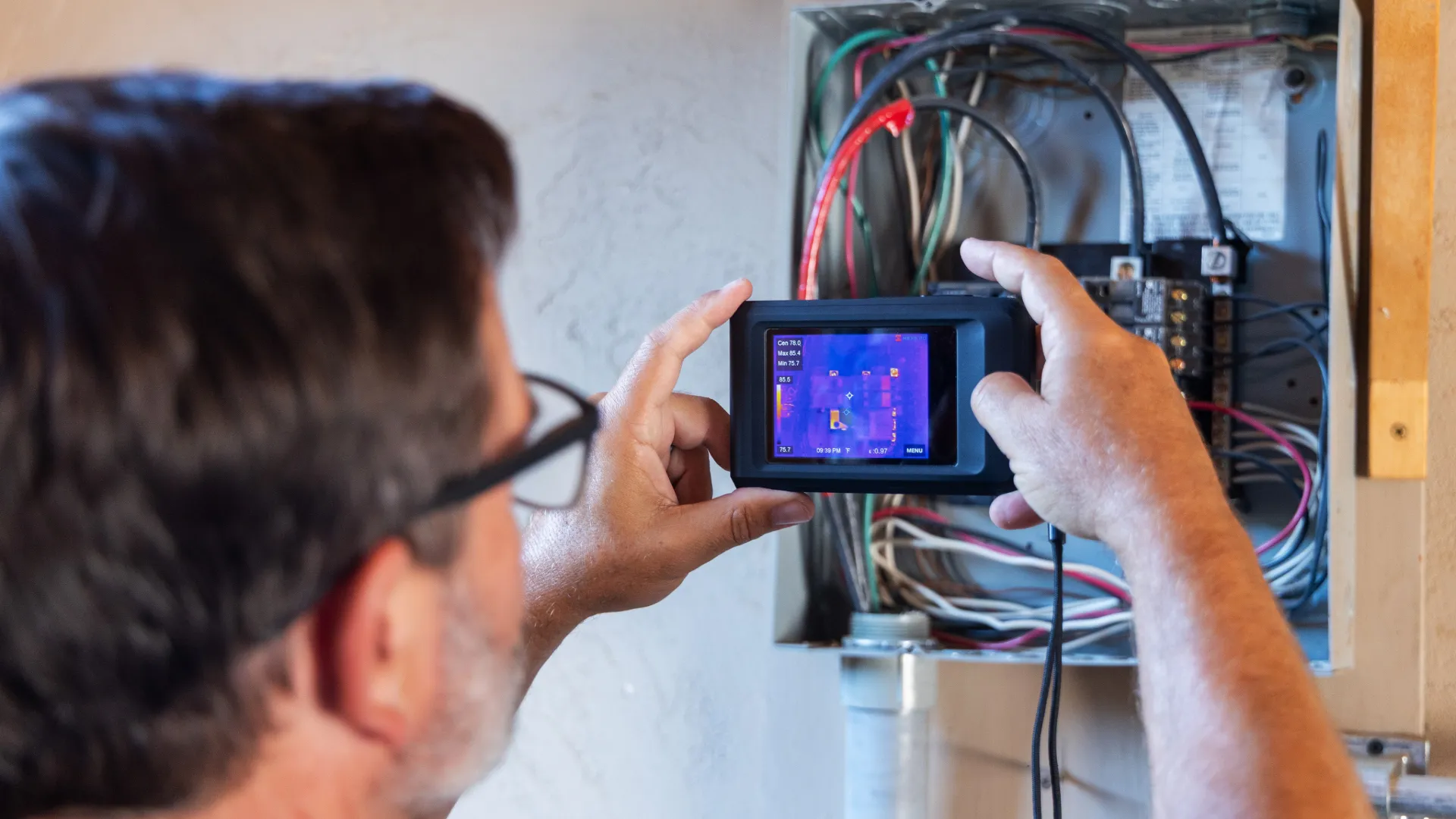
Panels Running Warmer Than Usual
One of the most common early indicators is excess heat.
Electrical panels naturally generate some heat during operation, particularly in busy industrial environments. But if a panel consistently feels hotter than normal, or cooling fans seem to be running constantly, it can point to underlying strain within the system.
That might be due to increased electrical loads, poor ventilation, ageing components, or connections beginning to deteriorate.
Sometimes the issue is relatively minor. Other times, heat can be an early sign that equipment is operating closer to its limits than intended. Either way, it is usually worth investing before it develops further.
Breakers Tripping More Frequently
An occasional beaker trip can happen on almost any site. But when trips start becoming more regular, or certain circuits repeatedly cause issues, it often suggests the panel needs attention.
Repeated trips can indicate overloaded circuits, failing components, changes to electrical demand, or equipment drawing more current than expected. And while resetting the breaker may get production moving again, it rarely addresses the underlying cause.
Over time, nuisance trips can become more disruptive, particularly if they begin affecting key processes or machinery.
The Panel no Longer Reflects the Reality of the Site
This is surprisingly common on industrial sites that have evolved.
Machines get added, systems get modified, and controls are adapted to keep operations moving. But the panel itself does not always get updated properly alongside those changes.
Labels may no longer match what the equipment actually does. Documentation can become outdated. Additional wiring may have been added over the years without a clear structure. At first, this might just seem untidy. But it can become a much bigger issue during maintenance or fault-finding, especially if engineers are trying to isolate or diagnose systems quickly.
Control panels should be clear and understandable, not something people are hesitant to work on.
Strange Noises or Smells
Control panels should generally operate quietly.
So, if there are unusual buzzing sounds, clicking, or burning smells coming from the panel, it is not something that should be brushed aside.
These signs can point to overheating components, loose connections, failing contractors, or electrical arcing inside the panel.
Not every unusual noise means something serious is about to fail. But equally, electrical systems rarely produce those signs without a reason.
And when left unchecked, small issues inside a panel can become much larger problems later.
More Frequent Machine Faults or Resets
Sometimes the panel itself is not the obvious focus.
Instead the signs appear through the machinery connected to it. Equipment may start needing resets more often. Faults may appear intermittently. Drives or PLC systems may behave inconsistently.
These kinds of issues are often blamed on the machine first, which makes sense. But in some cases, the root cause can sit within the wider control system or panel infrastructure supporting it.
Power quality issues, ageing components, or overloaded systems can all contribute to unreliable operation over time.
Temporary Modifications that Never Got Revisited
Most industrial sites have had situations where quick adjustments were needed to keep things moving.
Extra controls get added. Temporary wiring gets installed. Modifications are made during breakdowns or production changes.
The problem is that temporary changes often stay in place for years without being reviewed properly afterwards. Over time, panels can become more complicated, less organised, and harder to maintain safely.
Eventually, the control panel no longer reflects a structured system. It reflects a structured system. It reflects years of operational workarounds layered on top of each other.
Ageing Components and Limited Support
Older control panels are not automatically a problem. Many continue operating reliably for years. But ageing systems can become obsolete, spare parts harder to source, and older equipment may no longer suit the demands now being placed on it.
This becomes harder to source, and older equipment may no longer suit the demand, as it is not being placed on it.
This becomes more noticeable when faults occur.
A simple repair can quickly turn into a larger issue if replacement parts are difficult to obtain or if only a small number of people still fully understand the system.
Why Small Signs are Worth Paying Attention To
One of the biggest mistakes businesses make is assuming a control panel is fine simply because production is still running.
In reality, electrical systems often show signs of strain long before complete failure happens. And catching those signs early usually gives businesses more options. Planned maintenance is almost always easier than unexpected downtime, particularly in industrial environments where delays can quickly affect operations.
That does not necessarily mean a panel needs replacing. Sometimes the outcome is simply improved organisation, updated documentation, better coding, or replacing ageing components before they fail.
How ETL Can Help
At Electric Technics Ltd, control panels are looked at in the context of how the site actually operates, not just whether the system powers on.
That means assessing how the panel has evolved, whether it still suits operational demands, and whether there are signs that reliability or safety could become an issue later.
In some cases, the right approach is a straightforward tidy-up or review. In others, it may involve planning upgrades to improve reliability, supportability, or future expansion.
The important thing is understanding where things stand before small issues turn into later disruptions.