GET IN TOUCH

October 22, 2026
Electrical Thermal Imaging: How It Can Help Identify Problems Before They Cause Disruption
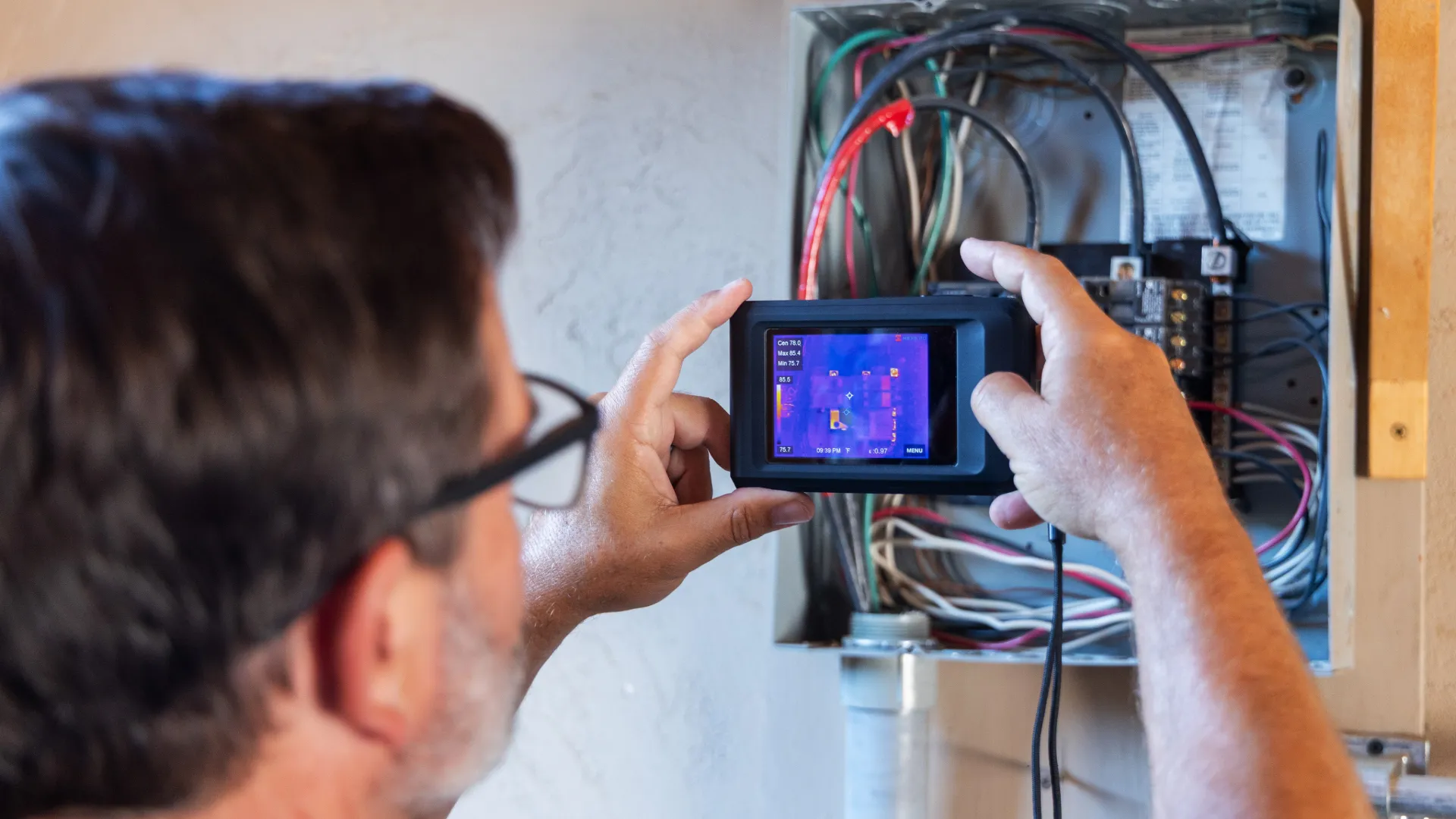
Electrical equipment produces heat during normal operation, so finding a warm component does not automatically mean there is a fault. What can be useful is spotting a temperature that looks unusual compared with similar equipment or other parts of the same electrical system. That difference may give an electrician somewhere to investigate further.
Thermal imaging allows these temperature patterns to be viewed without relying on visible damage appearing first. This can be particularly useful around electrical panels and other equipment that a commercial or industrial site depends on during the working day.
In this blog, we look at what electrical thermal imaging involves, where it can be used and how the information gathered can support maintenance and further electrical investigation.
What is Electrical Thermal Imaging?
Electrical thermal imaging uses a specialist camera to show differences in temperature across electrical equipment. Rather than producing a normal photograph, the camera detects infrared radiation from a surface and turns that information into a thermal image. Warmer and cooler areas can then be compared.
For an electrician, the image is useful because it can draw attention to something that looks different from the surrounding equipment. For example, one connection or component may be running noticeably hotter than others carrying out a similar job. That does not diagnose the problem on its own, but it does provide a reason to take a closer look and carry out further checks where needed.
The readings also need to be considered in context. Electrical load, the type of equipment and even the surface being viewed can affect what appears on a thermal image, so interpreting the results is just as important as taking the image itself.
What Can a Thermal Imaging Inspection Reveal?
A thermal image can draw attention to areas of electrical equipment that are running at a different temperature from what would normally be expected. This might be a connection, cable or component that appears noticeably hotter than comparable parts of the installation. The image itself does not confirm why this is happening, but it gives the electrician something specific to investigate.
There can be several reasons behind an unusual temperature reading. A poor electrical connection, increased load or a component beginning to deteriorate are some possibilities, although further checks would be needed before deciding on the cause. This distinction is important, as not every hot spot represents the same problem and some differences in temperature are perfectly normal.
On a working commercial or industrial site, finding an unusual reading in this way can be useful even if the equipment still appears to be operating normally. It provides an opportunity to investigate what is happening rather than waiting for a more obvious fault to develop.
Where Can Thermal Imaging Be Used?
Thermal imaging can be useful across several parts of a commercial or industrial electrical installation. Distribution boards, switchgear and control panels are common areas to inspect, particularly where they supply machinery or equipment that the business relies on throughout the working day.
It can also be used around electrical connections, cabling and components where access and conditions allow. On an industrial site, this might form part of looking at the electrical supply to production equipment or investigating a particular area where there have already been concerns.
The equipment being inspected will influence how useful the results are. Thermal imaging tends to provide the most meaningful information when there is something relevant to compare, such as similar components or previous readings, and when the electrical equipment is operating under representative conditions.
Finding Problems Before They Lead to Downtime
On a busy site, an electrical problem often becomes most disruptive when equipment has to be stopped without warning. Thermal imaging can help pick up unusual temperature patterns while equipment is still running, giving an electrician a reason to investigate before the issue develops any further.
This can make maintenance easier to plan. If a concern is found in a control panel or distribution equipment, for example, the business has an opportunity to decide when further investigation or repair can take place. For a production site, that could mean arranging the work around a planned shutdown or a quieter period instead of dealing with it after equipment has unexpectedly gone out of service.
Thermal imaging cannot predict when something will fail, and not every abnormal reading will lead to a breakdown. Its value is in providing additional information that can help businesses make maintenance decisions before an electrical problem starts affecting normal operations.
Thermal Imaging as Part of Planned Electrical Maintenance
Thermal imaging can be added to planned electrical maintenance where it is useful for the equipment on site. It gives the electrician another view of what is happening while the installation is operating, particularly in areas such as distribution equipment and control panels.
If something unusual shows up, the next step is to understand why. A hotter connection or component is not a diagnosis in itself, so other electrical checks may be needed before deciding whether any work should be carried out.
There is also value in keeping the thermal images and findings from an inspection. If an area needs monitoring rather than immediate attention, there is a record to refer back to during future maintenance. This can help build a better picture of how the equipment is behaving over time, rather than looking at each maintenance visit in isolation.
Electrical Thermal Imaging with Electric Technics Ltd
Electric Technics Ltd uses thermal imaging as part of its work with industrial electrical systems. It can provide useful information when investigating equipment, particularly where there is an unusual temperature pattern that would benefit from a closer look.
If something is picked up during an inspection, ET-L can investigate further to establish what may be causing it and whether any electrical work is needed. For businesses, this also means there is an opportunity to discuss any findings and, where possible, plan the next steps around the way the site operates.
If you would like to arrange thermal imaging or discuss a concern with electrical equipment at your premises, get in touch with our team at ET-L.