GET IN TOUCH

August 28, 2026
Powering Productivity: Modernising Older Electrical Systems on Industrial and Commercial Sites

Electrical systems are easy to take for granted. If the lights are on, the machinery is running and nothing is tripping, there is usually something more urgent for a facilities manager to deal with. That could be production, staffing, deliveries, repairs or any number of other day-to-day issues. The electrical installation tends to sit quietly in the background until something goes wrong.
At Electric Technics Ltd, we work on plenty of commercial and industrial sites where parts of the electrical system have been in place for twenty, thirty or even forty years.
That does not mean the whole installation is unsafe. Older equipment can remain reliable for a long time when it has been properly installed and maintained. The issue is that buildings change. A factory that originally ran a small number of machines may now have extra production lines, extraction, air conditioning, automated controls and vehicle charging. A warehouse may have added conveyors, new lighting, office space and charging equipment
Each addition might have been perfectly reasonable at the time, but years of smaller changes can leave the original installation doing far more than it was designed for.
When Something Finally Gives Up
An electrical failure on a busy site can quickly become expensive, and the replacement part itself may only be a small part of the cost. Production can stop. Staff can be left waiting around. Orders may be delayed, and some machinery needs more than a simple restart once the power is back on. There may be checks to complete, settings to restore or equipment to recalibrate. Even an outage lasting a few minutes can cause disruption for the rest of the day. Older switchgear can make the situation harder because replacement parts are not always easy to find. A breaker or contactor that was widely available twenty years ago may now be obsolete. The manufacturer may no longer exist, or the modern equivalent may not fit the existing equipment.
At that point, the business is no longer dealing with a simple component replacement. It may need an alteration, a temporary arrangement or a wider upgrade before the site can operate normally again.
That is where planned maintenance earns its keep.
Finding a potential problem during an inspection gives the site time to make a decision. The work can be priced, planned and completed during a quieter period instead of being dealt with as an emergency. The equipment is no longer choosing the shutdown date for you.
What Should You Be Looking Out For?
Some warning signs are obvious. If a circuit breaker trips repeatedly, there is a reason for it. The breaker may be doing exactly what it should, but the cause still needs to be found. Resetting it every few days is not a long-term solution. Heat is another common issue. Loose terminals, overloaded circuits and worn components can create hot spots. Sometimes there is discolouration or a noticeable smell. Sometimes the equipment simply feels warmer than it should.
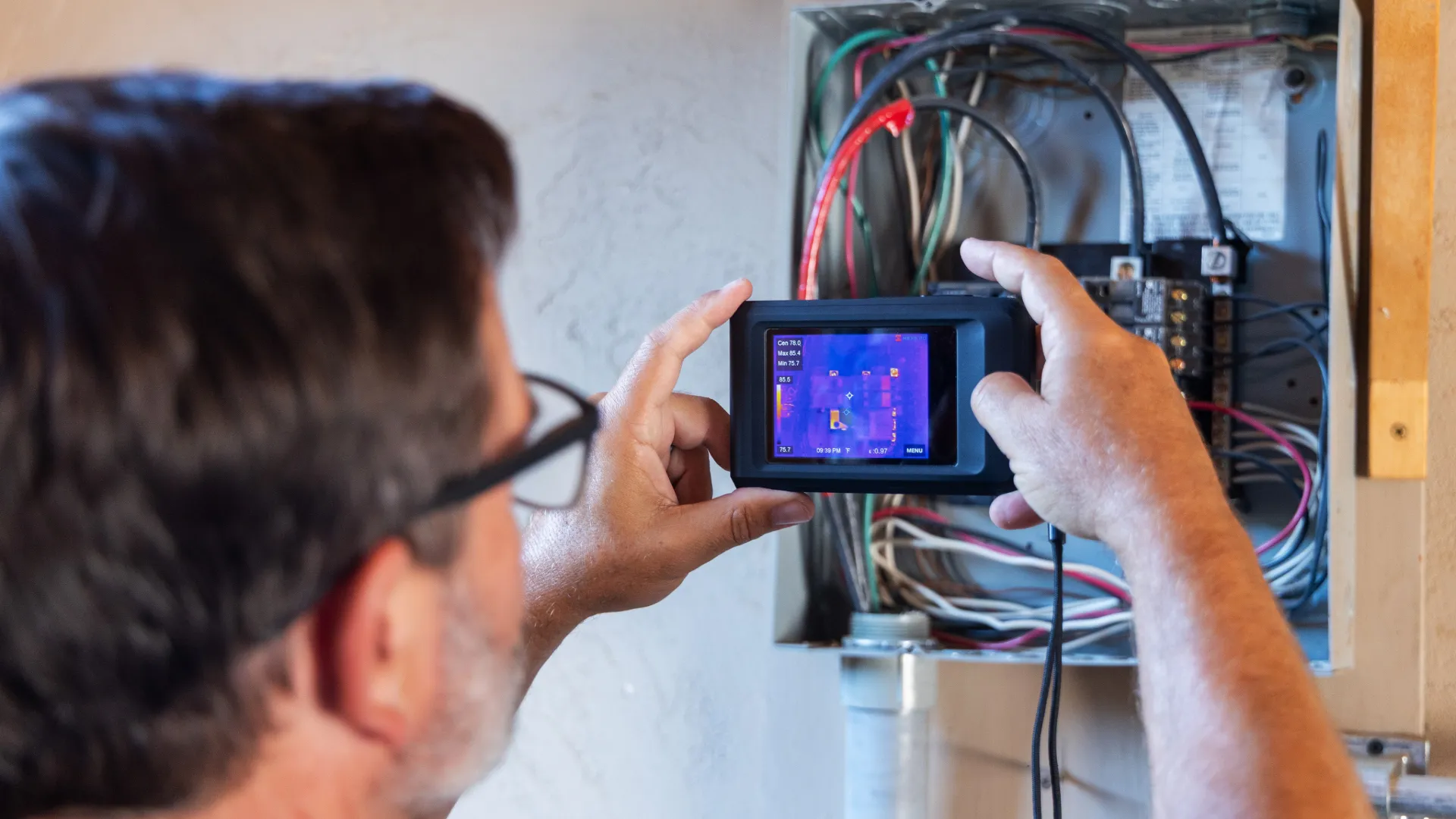
In other cases, the problem is found through testing or thermal imaging before there is any visible damage. Unusual buzzing or crackling from a distribution board should also be checked. It is surprising how often people say, “It has always made that noise,” as though that makes it less concerning.
Then there are the less dramatic issues.
Poor labelling is common on older sites. Circuit schedules may have been crossed out, rewritten or left unchanged after later alterations. Drawings may show the original installation but none of the equipment added since.
The site may still function, but any future maintenance takes longer because the electrician has to work out what supplies what before the actual job can begin. That becomes particularly frustrating during a fault or emergency shutdown.
Replacement Is Not Always the Answer
It would be easy to say that every old distribution board should be replaced, but that would not be true. Some older installations remain in good condition and are still suitable for the work they are doing. If the equipment is maintained, properly loaded and replacement parts are available, there may be no sensible reason to remove it. Sometimes a smaller improvement is all that is needed. One heavily loaded circuit may need upgrading while the rest of the board can remain. A damaged cable may be replaced without touching the wider installation.
There are also cases where the opposite is true.
A site may have spent years repairing the same ageing equipment, with every failure becoming more difficult and expensive to deal with. If spare parts are scarce, faults are becoming more frequent and there is no room for future additions, continued repair can stop making financial sense. A planned replacement may cost more at the outset, but it gives the business a known cost and a controlled shutdown.
That is often better than a series of emergency repairs with no guarantee of how long the next fix will last.
Energy Use Is Part of the Picture
Reliability is usually the main reason a site starts looking at its electrical system, but energy use often comes into the conversation as well. Most businesses know what they spend on electricity each month. Fewer know exactly where that electricity is being used. A large bill does not tell you whether the main problem is lighting, motors, heating, compressed air, machinery left running overnight or one inefficient area of production.
Sub-metering can help separate this information. Meters can be installed on individual areas, distribution boards or pieces of equipment. The results can then be compared against working hours or production output. That makes it easier to spot waste. For example, one production line may be using far more power than another while producing a similar amount of work. That could point to a maintenance issue, an inefficient motor or equipment being left running when it is not needed.
Without proper data, businesses can end up spending money in the wrong place.
Lighting Is Often an Easy Win
Older lighting is still common in factories, warehouses and commercial buildings. Fluorescent, sodium and metal halide fittings can use more electricity than modern LED lighting and often require more maintenance. An LED upgrade can make a noticeable difference, but it should not just be a case of swapping one fitting for another.
Different areas need different lighting. A warehouse aisle is not the same as a workshop bench. A loading bay does not have the same requirements as an office. The height of the fittings, shelving, machinery and natural light all make a difference.
Controls are important too. There is little point installing efficient fittings if they remain switched on in empty areas all night. Presence detection, daylight controls and timers can reduce unnecessary use, especially in storage areas, corridors and parts of a site that are only used occasionally. Emergency lighting should be considered at the same time rather than left as a separate problem.
New Machinery Usually Raises Questions
We are often asked to look at electrical infrastructure when a business is planning to install new equipment. A spare way on a distribution board does not necessarily mean the site has enough capacity. The board may have space, but the cabling, upstream switchgear or incoming supply may already be close to its limit.
Starting current can also be an issue with larger machinery. A machine may have an acceptable running load but draw considerably more power when it starts. If several machines start together, the effect can be even greater. Checking this early is far easier than discovering it a few days before the new equipment is due to go into production. It gives the machinery supplier, electrician and site team time to agree what is needed and plan the work properly.
The same applies to automation and modern control equipment. These systems can be more sensitive to poor earthing, electrical noise and voltage changes Sometimes the issue is not a lack of power but the quality of the supply feeding the equipment.
Electric Vehicles Are Changing Site Demand
Vehicle charging is another area that catches sites out. One charger may not make much difference to a large commercial supply. Ten chargers operating at the same time are a different matter. That does not always mean the incoming supply has to be upgraded. Load management can reduce the power available to the chargers when the rest of the site is busy and increase it when demand drops. Charging can also be scheduled overnight or around quieter periods
The important thing is to think beyond the first vehicle. Installing a system that works for two vans but has to be replaced when the fleet grows to twelve is rarely the best use of money. A phased design can allow the business to start small while putting the right groundwork in place for later.
Start by Finding Out What You Have
Before deciding on any upgrade, the first step is understanding the existing installation. A site survey can identify the switchgear, distribution boards, cabling, current loading and available capacity. Existing drawings, certificates and previous inspection reports are useful, although they are not always accurate on older sites
Speaking to the people who work there is just as important. They usually know which machine causes problems, which breaker trips and which part of the building is likely to expand next. Further testing, thermal imaging or load monitoring may then be needed to build a complete picture.
The aim should not be to replace equipment simply because it looks old. It should be to identify the areas that genuinely present a risk, cost the business money or may prevent future expansion.
Get In Touch With Us
Electric Technics Ltd provides commercial and industrial electrical installation, maintenance, inspection and upgrade work. We work around the way each site operates and aim to keep disruption as low as possible. Whether the issue is ageing switchgear, inefficient lighting, new machinery, automation or vehicle charging, we can help assess the current installation and recommend a practical way forward.
To arrange a site survey or discuss an upcoming upgrade, call 01827 260111.