GET IN TOUCH

September 8, 2026
Business Electrical Damage after a Water Leak or Flood: What You Should Do

Business Electrical Damage after a Water Leak or Flood: What You Should Do
After the exceptionally hot and dry summer of 2026, we are now moving into autumn, which typically brings much more rain and heavy downpours. For businesses, flooding or even a significant water leak can cause problems well beyond the immediate water damage, particularly if sockets, wiring, electrical equipment or machinery have been affected.
Knowing what to do immediately after water reaches your electrics can help protect yourself, your employees, and prevent further damage down the line.
I’ve found water in my Electrics, what’s next?
If water has entered an area containing electrical equipment, sockets, wiring or machinery, the first priority should be keeping people away from anything that may be unsafe. Before attempting to clear up or assess the damage, there are a few basic precautions businesses should take.
Check with relevant authorities if it is safe to enter the premises
If the flooding is significant, do not assume the building is safe to enter simply because the water level has started to fall. Before going inside, check any advice from the emergency services or local authority that has been involved with the incident. Floodwater can create several hazards at once, which include electrical risks, structural damage and contaminated water, so access should only be attempted once it’s safe to do so.
Do not step into any standing water
Never step into standing water if there is any possibility that electrical equipment, sockets, wiring or damaged cables have come into contact with it. Water may be carrying an electrical current even if there are no obvious warning signs, particularly if the supply has not been safely isolated. Keep staff and visitors away from the affected area and avoid touching any nearby electrical equipment until the situation has been assessed by a qualified electrician.
Turn Off the Power If It Is Safe to Do So
If you can reach the fuse board or distribution board without entering standing water or passing through an affected area, switch off the electrical supply at the main switch. Do not attempt this if the board itself is wet, damaged or difficult to access safely. In those circumstances, keep clear of the area and wait for a qualified electrician or the relevant emergency service to isolate the supply safely.
Call a qualified electrician
Once the immediate area is safe, contact a qualified electrician to inspect the affected electrical systems before power is restored or electrical equipment is used again. Water can cause damage that is not always obvious from a visual check alone.
The importance of an Electrical Inspection after a flood or water leak
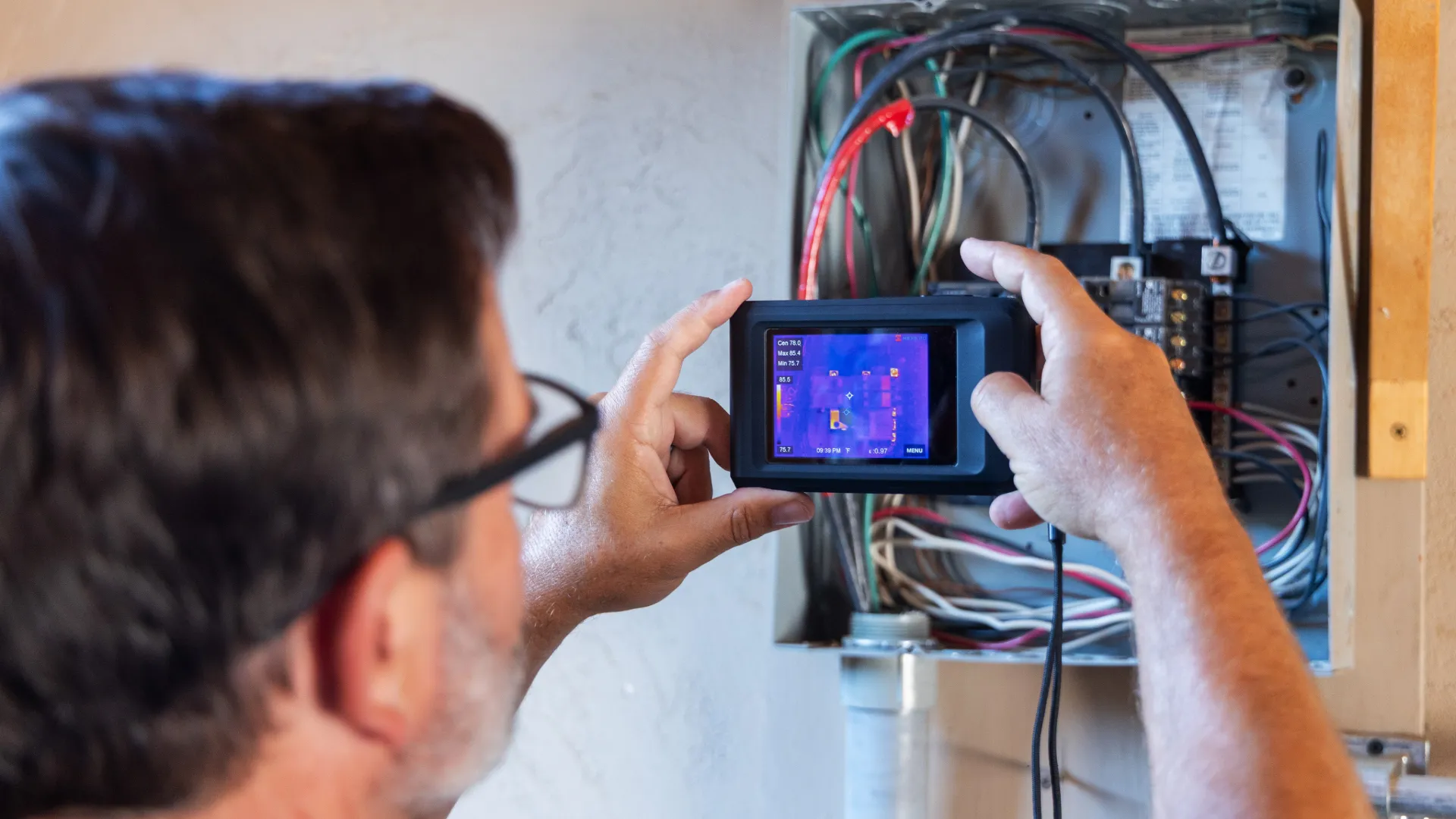
Once the water has been removed, it can be tempting to assume the electrical system within your business premises is safe as soon as everything appears dry. However, moisture can be retained within sockets, switches, wiring accessories and other electrical equipment long after the visible signs of flooding have gone. A proper electrical inspection by a qualified electrician helps identify any damage, contamination or deterioration caused by the water and determines what can safely remain in use before the business returns to normal operation.
Protecting yourself and your staff
The most obvious reason for having the electrical installation checked after flooding or a serious water leak is to make sure the premises are safe for everyone using them. Electrical damage is not always visible, and equipment that appears dry may still contain moisture or have suffered internal damage. Until the affected areas have been properly inspected and tested, staff should be kept away from damaged equipment and should not attempt to use sockets, switches, machinery or other electrical systems that may have been exposed to water.
Checking if sockets or switches need replacing
Sockets, switches and other electrical accessories that have been exposed to water should be inspected carefully before they are put back into use. Moisture and contamination can affect internal connections and components even when the outside appears dry. Depending on the extent of the damage, some accessories may be suitable to remain in service after inspection and testing, while others may need to be replaced to make sure the installation is safe and reliable.
Checking appliances and business equipment are safe for use
Any appliances, machinery or business equipment that may have come into contact with water should be checked before being switched back on. Water can damage internal components, connections and insulation, even where the equipment looks unaffected from the outside. Depending on the type of equipment and the level of exposure, further inspection or electrical testing may be required before it can safely return to service. If there is any doubt, the equipment should remain disconnected until it has been properly assessed.
Contact ET-L
If your commercial or industrial premises have been affected by flooding or a significant water leak, we can inspect the affected electrical systems and help determine what is safe and what the next steps are. Our Electrical Specialists can carry out testing, identify damaged components and advise on any repairs or replacements needed for power and equipment are restored and used as normal.